
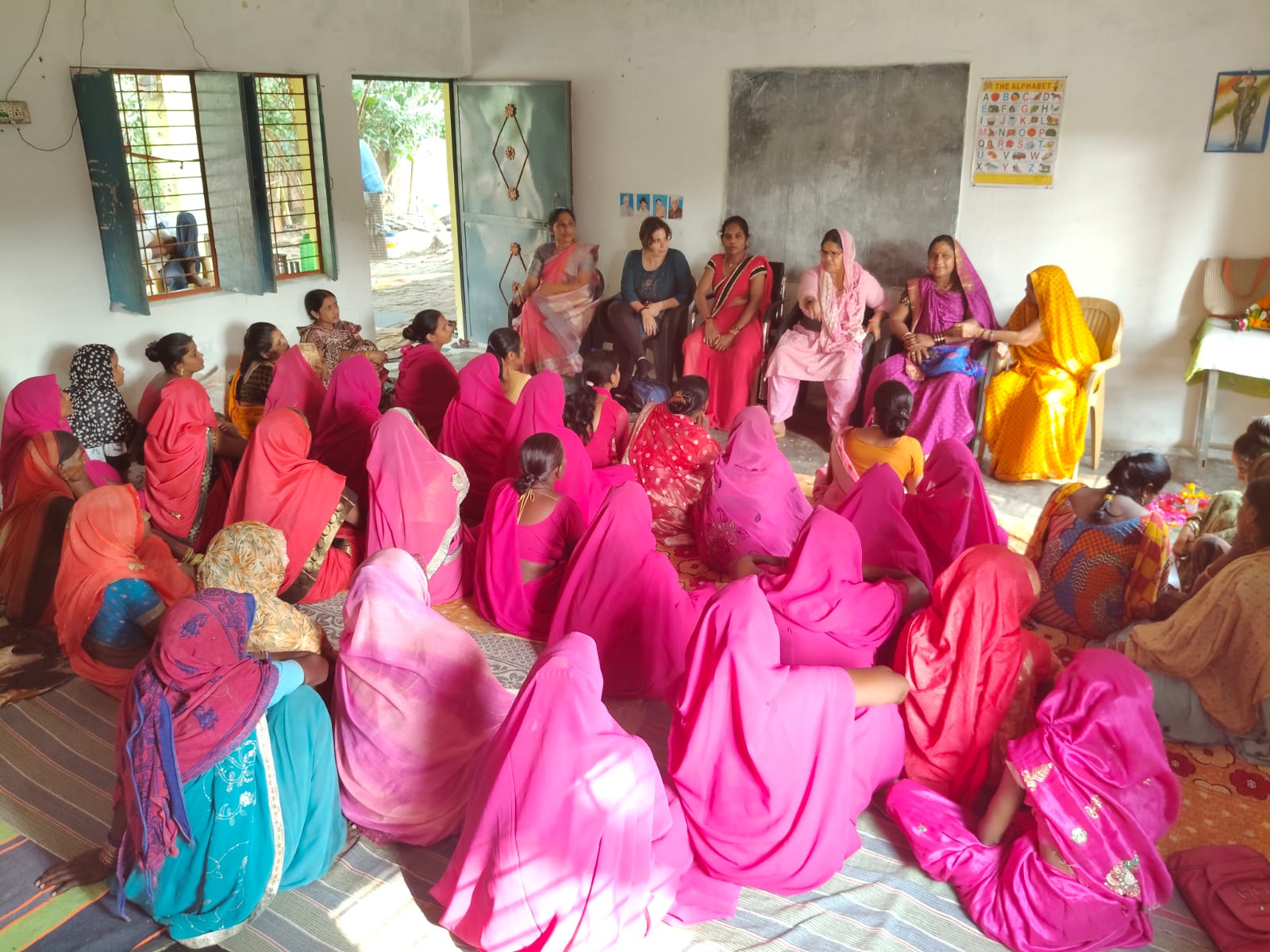
In the heart of rural India, where women have long struggled against domestic violence, poverty, corruption, caste discrimination, and social injustice, a powerful movement emerged wearing bright pink sarees and carrying fearless determination. That movement is the Gulabi Gang.
Founded in 2006 by Sampat Pal Devi in the Banda district of Uttar Pradesh, the Gulabi Gang became a voice for women who had been ignored for generations. The organization was created to fight violence against women, demand justice for the poor, and empower women to stand for their rights.
Today, the pink saree is not just clothing — it is a symbol of courage, unity, dignity, and resistance.
Why Pink?
The Gulabi Gang chose pink sarees to create a strong and recognizable identity. Pink, often associated with femininity, was transformed into a symbol of strength and rebellion.
Women from villages across Bundelkhand started wearing pink sarees together during protests, awareness campaigns, social justice missions, and community programs. Their unity sent a clear message:
Women are no longer silent.
The unique identity of the Gulabi Gang soon attracted attention from across India and around the world. International media, artists, researchers, and women’s organizations began recognizing the movement as one of the strongest grassroots women-led movements in India.
Fighting for Women Who Had No Voice
The Gulabi Gang works in areas where many women still face:
- Domestic violence
- Child marriage
- Dowry harassment
- Economic dependency
- Illiteracy
- Corruption and injustice
The organization helps women file complaints, reach police stations, fight legal battles, and gain confidence to speak against abuse. According to the organization’s mission, Gulabi Gang supports women through awareness, skill development, livelihood training, and social action.
In many villages, women who once lived in fear are now leading protests, participating in public discussions, and helping other women seek justice.
More Than Protest — A Movement for Empowerment

The Gulabi Gang is not only about protest. It is also about rebuilding confidence and creating opportunities.
The movement encourages women to become financially independent through small-scale work, cottage industries, handicrafts, tailoring, and local employment programs. The organization believes that economic independence is essential for true empowerment.
Women are also educated about:
- Legal rights
- Voting rights
- Government schemes
- Education for girls
- Health and hygiene
- Community leadership
This transformation has changed thousands of lives across Uttar Pradesh and beyond.
Global Recognition of Gulabi Gang
The courage of the Gulabi Gang has inspired people internationally. The movement has been featured in documentaries, books, newspapers, art projects, and global discussions on women’s rights.
International artists and journalists have visited India to document the journey of Gulabi Gang and its founder. Their story has become an inspiration for women-led social movements worldwide.
The pink saree has now become an international symbol of resistance against injustice.
The Message of Gulabi Gang
The Gulabi Gang teaches one powerful lesson:
When women unite, change becomes unstoppable.
From villages to international platforms, the movement continues to inspire women to fight fear, raise their voices, and demand dignity.
The pink saree revolution is not just a story of protest. It is a story of hope, courage, and transformation.
Conclusion
The Gulabi Gang stands as a living example of grassroots women’s empowerment in India. What started as one woman’s courage became a movement that changed thousands of lives.
As long as injustice exists, the voice of women in pink sarees will continue to echo across villages, cities, and nations.